Every year, the United States gives out up to 675,000 permanent visas. Many people try to move from a tourist visa to a green card. This path is complex and needs careful planning and knowledge of U.S. laws.
Changing from a tourist visa to a green card is hard and full of legal hurdles. It’s possible but needs exact knowledge of immigration rules and risks. You also need to know if you qualify for a green card.
U.S. laws offer different ways to get permanent residency. But, applying for a green card on a tourist visa needs a smart plan and lots of paperwork. This helps avoid legal problems.
Table of Contents
Key Takeaways
- Tourist visas are not for permanent residency applications
- Knowing the legal side is key before changing status
- Risks include being accused of visa fraud
- Getting help from a lawyer can make your application better
- Green card applications can take 8 to 14 months
- Who can apply depends on family, work, or special cases
Understanding the Tourist Visa: What You Need to Know
US immigration law can be tricky. Tourist visas are key for short visits to the United States. They help people enter the country for specific reasons.
Definition of Tourist Visa
The B-2 visa is for short trips to the United States. It’s for:
- Tourism and fun trips
- Visiting family or friends
- Medical treatment
- Joining in cultural or sporting events
Duration of Stay Limitations
Tourist visas have strict rules. You can stay up to six months. Knowing these rules is important to stay legal and avoid trouble.
Important things for tourist visa holders include:
- You can’t work here
- You must go back to your home country
- You can’t become a permanent resident right away
- Immigration officers might deny you if they think you’re not just visiting
About 75% of B-2 visa denials are because of not showing you’re just visiting. Officers check if you have ties to your home country and why you’re visiting the US.
If you want to live in the US or get a green card, a tourist visa isn’t enough. You need to plan carefully and get legal advice to move forward.
Can You Apply for a Green Card on a Tourist Visa?
Getting a green card from a tourist visa is hard. You need to know US visa laws well. And you must have a good legal plan.

Adjustment of Status (AOS) is a way to get a green card in the US. You need to meet certain rules to apply for this change.
Overview of Adjustment of Status
The adjustment of status lets you apply for a green card without leaving. You must:
- Keep your legal status
- Show you’re eligible for permanent residency
- Prove you didn’t come to the US to stay forever
Legal Implications of Applying
Applying for a green card on a tourist visa is risky. You must be careful about visa extensions. And you must show you didn’t come to the US to stay.
Important things for green card eligibility are:
- Having an immigrant visa ready
- Meeting USCIS rules
- Avoiding lying about why you came to the US
Note: If you came to the US on a tourist visa to get a green card, your application might be denied. This could also cause problems with immigration in the future.
Eligibility Requirements for Green Card Application
Understanding the US immigration process is key. It helps you know how to get a green card. You need to meet certain criteria to move from a tourist visa to permanent residency.
The green card application has many paths for those wanting to live in the US. These paths fall into a few main areas:
Family-Based Green Card Pathways
Family ties are important in US immigration. You can apply through certain family relationships:
- Immediate relatives of US citizens (spouses, unmarried children under 21, parents)
- Preference category relatives including:
- Unmarried sons and daughters over 21
- Married sons and daughters
- Siblings of US citizens aged 21 and above
Employment-Based Green Card Options
For those looking to move through work, there are special paths:
| Preference Category | Qualification Criteria |
|---|---|
| First Preference | Individuals with extraordinary ability |
| Second Preference | Advanced degree professionals |
| Third Preference | Skilled workers and professionals |
Special Immigration Categories
There are special ways to apply for residency too:
- Diversity Immigrant Visa Program
- Refugee or asylee status applicants
- Immigrant investors
- Victims of human trafficking
Each path needs its own documents and proof. Knowing these details can help you get a green card.
Risks of Applying for a Green Card from a Tourist Visa
Getting a US green card from a tourist visa is tricky. You must know the visa change process well. This helps avoid big immigration problems.
Trying to get a green card from a tourist visa is risky. It can hurt your chances for future immigration. The US checks if you’re telling the truth about why you came.
Understanding Intent Misrepresentation
Visa holder rights get hurt if you come to the US with a non-immigrant visa but want to stay. You must be honest about why you came.
- Coming to the US on a tourist visa but planning to stay can be seen as visa fraud
- This can lead to your visa being denied and trouble getting back in the US
- The government looks closely at why you first came
Potential Negative Outcomes
There are big risks in trying to get a green card from a tourist visa:
- Your visa application could be denied right away
- You might face deportation
- You could be banned from coming back to the US for years
- You’ll have a permanent record of immigration problems
There are big challenges in this process. People with pending green card petitions often face high denial rates. If the government thinks you came to stay, your chances get even lower.
To succeed, you need to show strong ties to your home country. You must also be open and honest during the immigration process.
Adjustment of Status vs. Consular Processing
Getting a green card has two main ways: Adjustment of Status (AOS) and Consular Processing. Each way has its own benefits for those wanting to live in the United States forever.
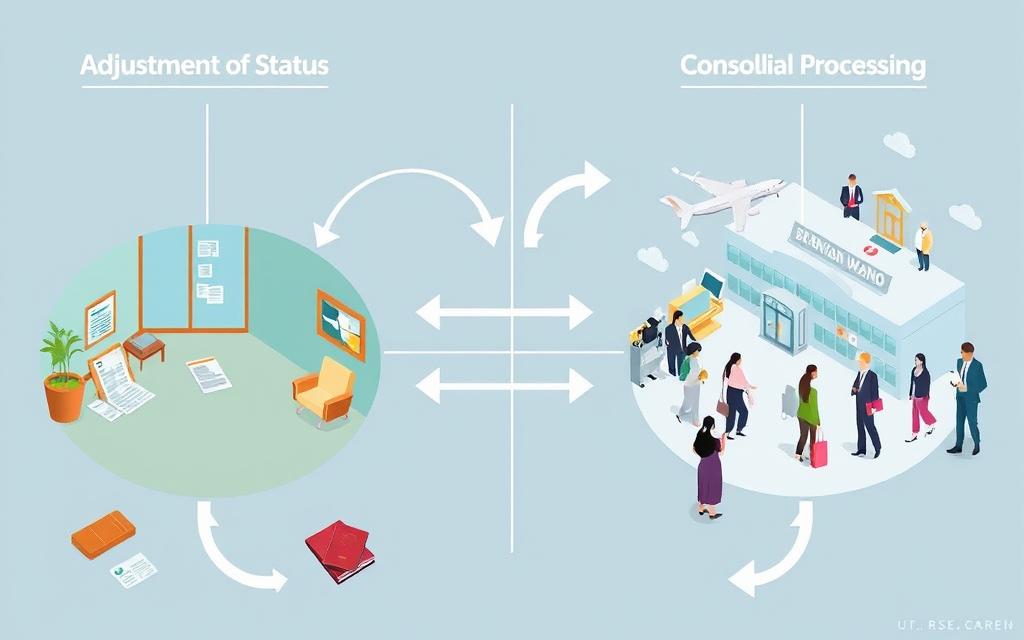
The green card process is complex. It depends on your situation which way is best for you. Let’s look at the main differences between these two paths to permanent residency.
Key Differences in Processing Methods
- Adjustment of Status lets you apply for a green card without leaving the United States
- Consular Processing means applying from outside the United States
- What visa you have is key to choosing between these methods
Choosing the Right Option
Choosing between AOS and Consular Processing depends on a few things:
- Your current immigration status
- Whether it’s for family or work
- Where you live and your personal situation
Family members of U.S. citizens often do better with Adjustment of Status. AOS usually takes 8 to 14 months. But, Consular Processing can take even longer.
Important Considerations
It’s important to think about your visa status and any risks. Here are some things to remember:
- Only certain people can use Adjustment of Status
- Work-based applicants might need more forms
- Medical checks and background checks are required
Knowing the details of each green card application method can really help your chances of getting permanent residency in the United States.
How to Transition from a Tourist Visa
Going from a tourist visa to US residency needs careful planning. You must understand immigration law well. The process has many important steps that require attention to legal details and documents.

Before you start your green card application, check if you’re eligible. Tourist visa holders face special challenges when applying for US citizenship or permanent residency.
Essential Steps Before Applying
- Verify your current nonimmigrant status and authorized stay duration
- Check Form I-94 for precise expiration date
- Confirm you have not violated current visa terms
- Determine your specific green card eligibility pathway
Documentation Requirements
For legal immigration, you need a lot of documents. Important documents for a green card include:
- Form I-130 (for family-based petitions)
- Form I-140 (for employment-based petitions)
- Form I-485 (Adjustment of Status application)
- Passport and visa copies
- Birth certificates
- Marriage certificates (if applicable)
- Employment verification letters
Applicants must be strategic about keeping legal status during the US residency application. If you stay too long on a tourist visa, it can make getting a green card harder. It might even stop you from entering the US again in the future.
Talking to an immigration lawyer can help a lot. They can guide you through the complex legal world. They can help avoid problems and increase your chances of getting permanent residency.
Timing: When to Apply for a Green Card
US visa laws are complex. Planning is key when applying for a green card. The right time to apply can greatly affect your chances of approval.
Choosing the best time to apply for a green card is important. Tourist visa rules are a big part of this decision. The B-1/B-2 visa, good for ten years, has its own challenges.
Ideal Timeframe for Application
Several things affect the best time to apply for a green card:
- Visa availability in your category
- Your current immigration status
- Risks of lying about your travel plans
Considerations for Application Timing
Important things to think about include:
- The 90-day rule: Applying too soon can make people think you lied about your trip
- Updates in the visa bulletin
- How long it takes to process your Adjustment of Status (AOS)
AOS processing usually takes 8 to 14 months. Those related to U.S. citizens have better chances. You must weigh your visa extension options against green card rules.
There are risks like 3 to 10-year entry bars if you don’t follow visa rules. Knowing US visa laws well can help avoid these problems and boost your green card approval chances.
Necessary Forms and Fees
Getting a US green card means you need the right documents. You must know the forms and costs for a successful application. Check out this link for more info.
Essential Green Card Application Forms
For a US green card, you need to fill out some important forms:
- Form I-485: Adjustment of Status application
- Form I-693: Medical examination report
- Form I-864: Affidavit of support
- Form I-765: Employment Authorization Document
- Form I-131: Travel Document
Filing Fees and Cost Considerations
Getting residency costs money. Here’s a table with the current fees:
| Form | Current Filing Fee | Effective Date |
|---|---|---|
| Form I-485 | $1,140 | 02/10/2025 |
| Form I-765 | $520 | 04/01/2024 |
| Form I-131 | $575 | 04/01/2024 |
Pro tip: Filing many forms at once can save you money. Always check the USCIS website for the latest fees.
Having the right documents and filing on time is important. You also need to tell USCIS if you move within 10 days. Use Form AR-11 for this.
The Role of Immigration Lawyers
Going through the visa change process is hard. Immigration lawyers help a lot. They guide you through the green card application steps. Their help can make a big difference in your success.
Studies show that people with lawyers do better. About 65% of visa applications get approved with legal help. Lawyers do more than just fill out forms.
When to Seek Legal Advice
Here are times to get a lawyer:
- Complex family-based green card applications
- Previous immigration violations
- Uncertain eligibility status
- Complicated personal immigration history
- Potential legal complications
Benefits of Professional Representation
Lawyers bring many benefits:
- Expert guidance through application processes
- Detailed form preparation and review
- Representation during immigration authority interactions
- Strategic advice for overcoming challenges
- Higher chances of application approval
Legal help costs between $1,500 and $10,000. But it can save you from big mistakes. Lawyers who specialize in certain visas can improve success rates by up to 40%. With their help, you can feel more confident and precise in your green card application.
Frequently Asked Questions
Understanding US immigration can be tough, like changing a tourist visa to a green card. Many people have big questions about the green card process and their visa status.
Common Green Card Application Concerns
Applicants often wonder about moving from a tourist visa to permanent residency. Here are some key insights to help clarify the process:
- Can I apply for a green card while on a tourist visa?
- What are the risks of misrepresenting my immigration intent?
- How long does the green card application process take?
Clarifying Immigration Misconceptions
Many people have wrong ideas about visa changes and green cards. Knowing the truth is key for successful US immigration:
- Marriage does not automatically guarantee permanent residency
- Tourist visa holders cannot easily switch to work visas
- Each application requires thorough documentation
About 40% of immigrant petitions are denied because of incomplete applications. This shows how important it is to prepare well and know the US immigration system well.
Key Application Insights
When thinking about a green card application from a tourist visa, applicants should know:
- Most applicants must complete at least two forms
- Visa availability is critical for filing
- Attendance at Application Support Center appointments is mandatory
Getting professional legal advice can really help your green card application. Every immigration case is different. Personalized advice can help you deal with challenges in the visa change process.
Conclusion: Making the Right Decisions
Understanding immigration law is hard. It needs careful thought and planning. When you apply for a green card from a tourist visa, knowing US citizenship and legal immigration rules is key. Getting US residency takes time, lots of paperwork, and a detailed plan to follow all laws.
Key Insights for Green Card Applicants
The green card application has many important steps. Adjustment of Status (AOS) can take 8 to 14 months. But, if you’re a family member of a U.S. citizen, it might be faster.
It’s vital to check if you’re eligible. You must enter legally and stay that way to apply successfully.
Staying Informed and Prepared
To succeed in US immigration, keep learning and get help from experts. Talking to immigration lawyers can guide you through the complex laws. It can also lower risks and boost your chances of success.
Immigration laws are tricky and always changing. So, it’s important to keep up with new rules and policy updates.