In the United States, about 20% of drivers suspected of DUI say no to a blood test. This shows how tricky the laws are about refusing a blood test after a DUI stop.
Drivers face a big choice when asked for a blood test during a DUI stop. Saying no can lead to serious penalties. Refusing a blood test can cause big problems that last a long time.
The rules for refusing a blood test are complex. They aim to keep everyone safe while also protecting your rights. Knowing these rules is key when you’re in a stressful situation at the side of the road.
Table of Contents
Key Takeaways
- Refusing a blood test can result in automatic license suspension
- Implied consent laws vary by state
- Legal consequences differ based on prior offenses
- Potential penalties include fines and possible jail time
- Understanding your rights is critical in DUI scenarios
Understanding Blood Tests
Blood tests are very important in legal and medical fields. They help in DUI investigations by showing a person’s health and if they used substances. This is key for legal and health reasons.
Blood tests are used for many things. They help doctors and lawyers. They are important in our society.
Exploring Blood Test Fundamentals
Blood tests check different parts of blood. They are used in DUI cases to find out about alcohol and drugs. They also look for health issues.
- Alcohol concentration levels
- Drug presence and quantities
- Potential health markers
- Metabolic indicators
Common Reasons for Conducting Blood Tests
Doctors and lawyers use blood tests for many reasons. They check for alcohol and drugs. They also check health and if someone is fit for work.
- Criminal investigations: Determining blood alcohol content (BAC)
- Health screenings
- Workplace compliance testing
- Forensic evidence collection
Blood tests give important evidence in DUI cases. They help make fair decisions in court.
| Test Type | Primary Purpose | Key Indicators |
|---|---|---|
| BAC Test | Legal Compliance | Alcohol Concentration |
| Comprehensive Metabolic Panel | Health Assessment | Organ Function |
| Toxicology Screen | Substance Detection | Drug Presence |
Knowing about blood tests helps people make smart choices. It’s important for health and legal matters.
Legal Obligations Related to Blood Tests
Understanding blood tests and DUI laws can be tricky. Knowing your rights and duties is key when facing chemical tests.
In the U.S., DUI laws set clear rules for drivers. They guide what happens during traffic stops.
Who Can Legally Request Blood Tests?
Many can ask for blood tests in certain cases:
- Police during DUI checks
- Doctors
- Court officials
- DMV staff
Understanding Your Legal Rights
Drivers have rights when asked for a blood test. In places like Texas and Michigan, driving means you agree to tests.
Important rights include:
- Knowing why you’re being tested
- Getting a lawyer
- Questioning the test
- Getting test results
Refusing a blood test can lead to big legal problems. This includes losing your license and facing more charges.
Medical Consequences of Refusing Blood Tests
Refusing blood tests can make it hard to diagnose and treat health issues. Patients who don’t get these tests might risk their health. It’s important to know the risks to make smart health choices.
When people say no to blood tests, doctors face big challenges:
- They can’t diagnose as well.
- They can’t find health problems early.
- Treatment might be delayed.
Potential Impact on Diagnosis
Refusing blood tests can lead to big problems. Blood tests show important health details. They can reveal issues like:
- Metabolic disorders
- Hormone imbalances
- Infectious diseases
- Nutritional deficiencies
Delays in Treatment
Not getting blood tests can lead to serious issues. Delaying or avoiding blood tests might lead to:
- Missing early signs of serious problems.
- Health issues getting worse.
- Treatment getting harder.
Doctors say it’s key to talk about worries before refusing blood tests. Talking openly can clear up fears and explain the need for tests.
Laboratory Policies on Refusal
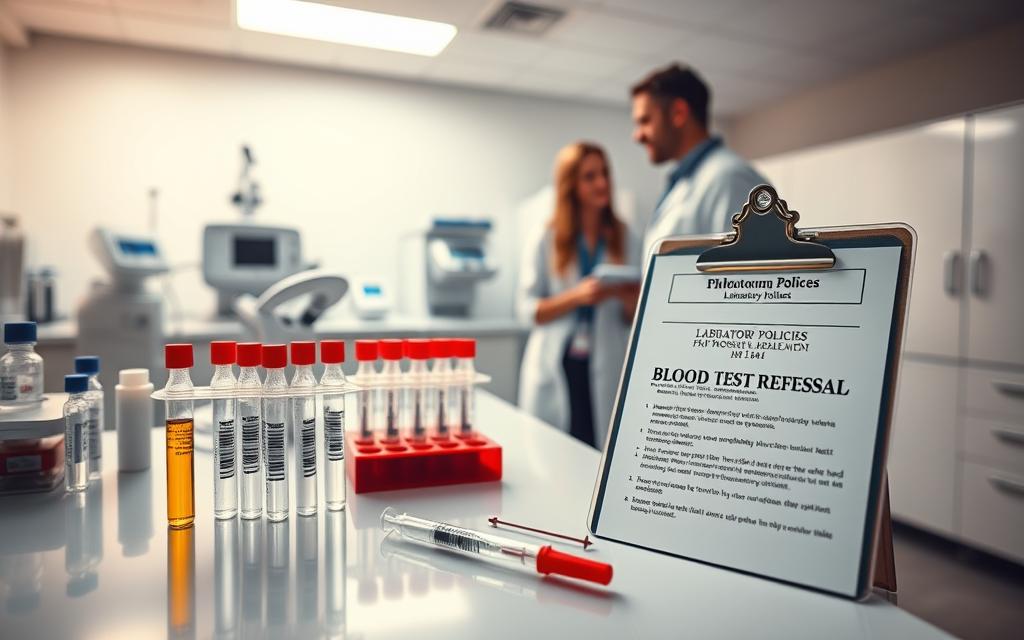
Medical labs deal with tricky rules when patients say no to blood tests. This is true for DUI blood test rights. Knowing these rules helps both patients and doctors handle test refusals well.
When a patient doesn’t want a blood test, labs follow certain steps. These steps help keep records right and talk to the right people.
Laboratory Documentation Protocols
Labs keep detailed records of when patients say no to tests. These records are very important, like in DUI cases. The records usually have:
- Patient details
- Why the test was needed
- Why the patient said no
- When the doctor was told
Notification Procedures
When a patient doesn’t want a blood test, labs start a set process. They tell important people right away to figure out what to do next. This might include:
- Telling the doctor who asked for the test
- Writing down the refusal in the patient’s file
- Telling the police in some cases
In DUI cases, labs work with police to handle refusals right. Knowing your rights and what might happen is key to making good choices.
Psychological Implications of Refusing a Blood Test
Medical tests can make people very scared. They might not want to take a blood test. It’s important to understand why they feel this way.
Many people get very stressed about medical tests. This stress comes from deep fears. It’s often because they worry about their health, like when they might have to take a DUI test.
Exploring Emotional Barriers
There are many reasons why people might not want to take a test. These include:
- Fear of getting bad news
- Scary past medical experiences
- Not knowing what the test is about
- Being really worried about health problems
Strategies for Managing Test-Related Anxiety
To deal with test anxiety, people can try a few things:
- Talk to your doctor
- Ask them to explain the test
- See a therapist
- Try to relax
Knowing why people might not want to take tests helps them make better choices about their health.
| Psychological Factor | Impact on Test Refusal |
|---|---|
| Fear of Unknown | High likelihood of avoiding medical tests |
| Past Negative Experiences | Increased resistance to medical procedures |
| Lack of Medical Knowledge | Potential misunderstanding of test importance |
Dealing with these fears takes time, understanding, and talking openly. Patients and doctors need to work together.
Types of Blood Tests You Might Refuse
Blood tests are important in health and law. They can lead to big choices. Knowing about them helps protect your health and rights.
Doctors and cops ask for different blood tests. Saying no can have big effects, like jail time for DUI.
Routine Medical Blood Tests
These tests check your health. They include:
- Complete Blood Count (CBC)
- Metabolic Panel
- Lipid Profile
- Thyroid Function Tests
Specialized Blood Tests
These tests look for specific health issues or legal needs. Refusing them can have big consequences. Examples are:
- Genetic screening
- Toxicology screenings
- Hormone tests
- Infectious disease panels
Preoperative Blood Work
Before surgery, blood tests are needed. Saying no can cause:
- Delayed surgery
- Risks during surgery
- Uncertainty about your health
In DUI cases, refusing tests can lead to penalties. Knowing your rights is key when asked for blood tests.
Alternatives to Blood Tests
Doctors know patients might worry about blood tests. If there’s a DUI refusal hearing or if people want other ways to check their health, there are options. These options are not just blood draws.
There are many ways to learn about your health without blood tests. These methods help patients feel better about their medical checks. They also help deal with the worries of refusing blood tests.
Non-Invasive Diagnostic Approaches
- Imaging Technologies
- Ultrasound scans
- MRI examinations
- CT scans
- Physical Assessment Methods
- Comprehensive physical examinations
- Symptom-based evaluations
- Specialized clinical observations
When Alternative Methods Work Best
These methods work best when:
- The medical condition allows non-invasive testing
- Initial symptoms are clear and identifiable
- Comprehensive medical history is available
| Diagnostic Method | Best Used For | Accuracy Level |
|---|---|---|
| Ultrasound | Soft tissue examination | 85-90% |
| MRI | Neurological assessments | 90-95% |
| Physical Examination | Initial health screening | 70-80% |
Always talk to a doctor to find the best test for your health needs.
Communicating Your Refusal to Healthcare Providers
Talking to doctors when you might not want a DUI blood test is tricky. You need to be clear and polite. Doctors help by listening and giving good advice.

Start by being ready and clear. Talk about not wanting tests calmly and know your facts.
Strategies for Discussing Your Decision
- Express your concerns clearly and concisely
- Listen actively to the healthcare provider’s perspective
- Ask specific questions about the proposed test
- Request alternative diagnostic methods if possible
Key Communication Principles
When you talk about not wanting a DUI test, keep these tips in mind:
| Principle | Description |
|---|---|
| Respect | Maintain a professional and courteous tone |
| Transparency | Share your genuine reasons for hesitation |
| Collaboration | Work together to find mutually acceptable solutions |
Being open can help build trust and solve concerns about tests.
Building a Constructive Dialogue
Talking well with doctors means understanding each other. Be ready to share your side while listening to theirs. Your aim is to work together, respecting both your rights and their knowledge.
Risks of Not Knowing Your Health Status
Knowing your health is key. Skipping blood tests can be risky, even if you have chronic conditions or want to stay healthy. Not getting tested might hide important health info.
Blood tests are vital for spotting health problems early. Doctors use them to:
- Find early signs of chronic diseases
- Keep an eye on ongoing health issues
- Check for genetic risks
- Look at your metabolic health
Managing Chronic Conditions
People with ongoing health issues need regular blood tests. DUI implied consent situations show how important it is to know about medical tests.
| Condition | Recommended Testing Frequency | Potential Risks of Avoiding Tests |
|---|---|---|
| Diabetes | Every 3-6 months | Uncontrolled blood sugar, organ damage |
| Hypertension | Annually | Heart disease, stroke risk |
| Cholesterol | Every 4-6 years | Cardiovascular complications |
Importance of Preventative Care
Preventative care is more than treating sickness. Regular blood tests can spot health risks early. This lets you make smart choices about your health.
Ethical Considerations in Refusal
Medical decisions are complex. They balance patient rights and doctor advice. Blood test DUI cases show the tough choices doctors and patients face.
Doctors face tough choices when patients say no to tests. They must think about many things and what might happen next.
Patient Autonomy in Medical Decisions
Patients have the right to decide about their health care. This includes saying no to blood tests. Important things to think about are:
- Understanding personal health risks
- Evaluating possible medical effects
- Knowing legal issues of refusal
Healthcare Provider Responsibilities
Doctors must respect patient choices while trying to help them. Saying no to tests can affect legal and health outcomes. They usually need to:
- Explain the risks of not taking the test
- Write down the patient’s choice
- Make sure the patient understands everything
Ethical decisions need clear talk, respect, and working together between patients and doctors.
Consequences in Specific Scenarios
Understanding blood test refusals is complex. Different places have different rules. This affects the consequences of saying no to a blood test.
When facing license suspension, knowing the impact is key. Workplace and emergency settings have their own rules. These rules can change the outcome of refusing a blood test.
Emergency Medical Situations: Critical Decision Points
In emergency rooms, saying no to a blood test is risky. Doctors might think it’s a sign of a big problem. It could also slow down needed tests and lead to legal issues.
It’s important to know that DUI blood test rights are not the same as medical tests. Medical tests focus on keeping you safe and treating you right away.
Workplace Testing: Professional Implications
For people in jobs that need safety, refusing a blood test can be serious. It might mean:
- Being taken off the job right away
- Getting fired
- Having to take more tests
Workplace rules about blood tests vary. It’s important to know your company’s rules before saying no to a test.
What to Expect if You Refuse a Blood Test
Refusing a blood test, like in a DUI case, can lead to many legal and administrative issues. It’s important to know what might happen. This helps you make smart choices when faced with a forced blood draw DUI situation.

When you say no to a DUI test, the law has rules to follow. The penalties for not taking the test can be big and happen right away.
Immediate Next Steps in a Blood Test Refusal
After saying no to a blood test, drivers can expect a few things right away:
- Automatic license suspension
- Potential vehicle impoundment
- Mandatory court appearance
- Potential arrest and booking
Possible Follow-Up Actions
The effects of not taking a blood test don’t stop after the traffic stop. The police might try other ways to get evidence:
- Get a warrant for a blood draw
- Schedule an administrative hearing
- Start criminal prosecution
- Impose harsher penalties for refusing the test
In many places, refusing DUI test penalties can be worse than taking the test. Saying no to a test can be seen as admitting guilt. This can really affect your case later on.
If you’re facing a forced blood draw DUI, talk to a lawyer right away. They can help you understand your rights and possible defenses.
Reconsidering Your Decision
Deciding to refuse a blood test can be tough. It might seem right at first, but sometimes you need to think again. It’s important to know when and how to change your mind to keep your health and legal rights safe.
When dealing with DUI or field sobriety refusal, think carefully. There are signs that tell you it’s time to rethink:
- Persistent or worsening medical symptoms
- Legal advice recommending compliance
- Potential serious health consequences
- Risk of additional legal complications
Signs You Should Change Your Mind
Doctors and lawyers say there are important signs to think about:
- Escalating health concerns that need quick answers
- Potential legal ramifications of not testing
- Advice from trusted health experts
Tips for Discussing Testing Again
Talking to doctors or cops about testing again is important. Be open about your worries and ask about the need for testing. Make a list of questions and listen well to their answers.
Remember, refusing field sobriety tests can lead to big problems. Talking openly and understanding why tests are needed can help you make a smart choice. This choice protects your health and legal rights.
Real-Life Stories and Experiences
Dealing with DUI laws can be tough. People share their stories about refusing blood tests during stops. These stories show the risks and long-term effects of DUI refusal hearing decisions.
Those who got DUI refusal jail time share important lessons. They talk about the strict legal system. Their stories cover common challenges:
- Unexpected legal complications
- Financial burdens from court fees
- License suspension consequences
- Potential employment impacts
Lessons from Personal Experiences
Many wish they knew their rights better during stops. One key lesson is: talking and cooperating can lessen legal troubles. Experts say knowing local laws and consequences is key before making choices.
Transformative Communication Strategies
Success stories show talking to cops and lawyers can help. People who get legal advice and cooperate often do better in DUI cases.
These stories highlight the need for smart choices in legal battles, like DUI cases.
Conclusion: Making Informed Choices
Understanding blood test refusals is complex. It involves knowing your rights and the possible outcomes. Whether it’s for a medical test or a DUI, your choices matter a lot.
Refusing blood tests can have big consequences. You might face legal issues or miss out on important health info. In DUI cases, refusing can lead to losing your license or even jail time.
Weighing Risks and Benefits
Knowing your rights is key, but so is understanding the risks. Talking to doctors and lawyers can help. They can explain what refusing a blood test might mean for you.
Being open and talking things through is best. This way, you can find solutions that work for everyone.
Final Thoughts on Blood Test Refusals
It’s important to balance your freedom with taking care of your health. You have the right to choose, but think about how it affects you. Always consider the big picture and talk to experts.
By doing this, you can make choices that are good for you and everyone else involved.